
ABOUT 4BASEBIO
4basebio is revolutionizing DNA manufacturing
Based in the heart of the Cambridge UK biotech ecosystem, we are pioneering a paradigm shift: the transition from legacy bacterial-based manufacturing to high-performance, synthetic enzymatic DNA synthesis. Our mission is to empower pharma and biotech innovators with synthetic, cell-free DNA that eliminates risks and streamlines the path from preclinical development to commercialization.
Our scientific advantage
At 4basebio, we don’t just manufacture DNA; we engineer it for the future. Our proprietary enzymatic synthesis platform bypasses the "bottleneck" of traditional DNA manufacturing. By moving away from traditional cell-based, bacterial-fermentation systems, we offer a unique approach to critical starting material. The advantages of synthetic DNA are as follows:
- Unrivaled purity: We eliminate the risks of bacterial contaminants and antibiotic-resistance genes, ensuring a safer profile for clinical applications.
- Scalability at speed: Our enzymatic process transforms timelines, moving from design to GMP-grade DNA and mRNA in a fraction of the time required by pDNA.
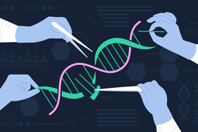
- Precision engineering: We create application-specific DNA constructs tailored for the precise needs of gene editing (CRISPR), mRNA production, viral vector, and DNA vaccines.
INDUSTRY INSIGHTS
-

Synthetic DNA replaces plasmids for AAV production, cutting contaminants and variability and improving reproducibility and scalability from research to manufacturing.
-

Synthetic ssDNA and dsDNA donor templates boost CRISPR precision, efficiency, and consistency. The right strategy reduces errors, increases HDR, and delivers more reliable results across applications.
-

Personalized cancer vaccines face a DNA production bottleneck. Synthetic approaches speed timelines, boost consistency, and simplify workflows to deliver individualized therapies faster.
-

Learn how risk-based studies, quality attributes, and proactive regulatory engagement support confident manufacturing transitions.
-

PolyA tail stability shapes mRNA potency, consistency, and manufacturability. Addressing integrity early reduces variability, simplifies workflows, and supports reliable clinical scale‑out.
-

Cell‑free DNA manufacturing removes bacterial risk and complexity, enabling faster, flexible production that supports advanced and personalized therapies with consistent quality and regulatory confidence.
-

Personalized cancer vaccines need fast, flexible manufacturing. Cell‑free synthetic DNA enables rapid, small‑batch mRNA production, supporting individualized therapies beyond plasmid‑based limits.
-

Cell‑free synthetic DNA provides a scalable, safer alternative to plasmids by eliminating bacterial risks, simplifying quality control, and enabling complex sequences under GMP‑aligned conditions.



CONTACT INFORMATION
4basebio
25 Norman Way, Over
Cambridge, CB24 5QE
UNITED KINGDOM
Contact: Florent Foxdoxel, Inside Sales Manager
SOLUTIONS
-

Cell‑free DNA simplifies mRNA production by removing bacterial risk, stabilizing polyA tails, and eliminating extra steps — delivering higher yields and cleaner workflows.