
What LSPA's Life Sciences Future Says About The Road Ahead For CGT

By Erin Harris, Editor-In-Chief, Cell & Gene
Follow Me On Twitter @ErinHarris_1

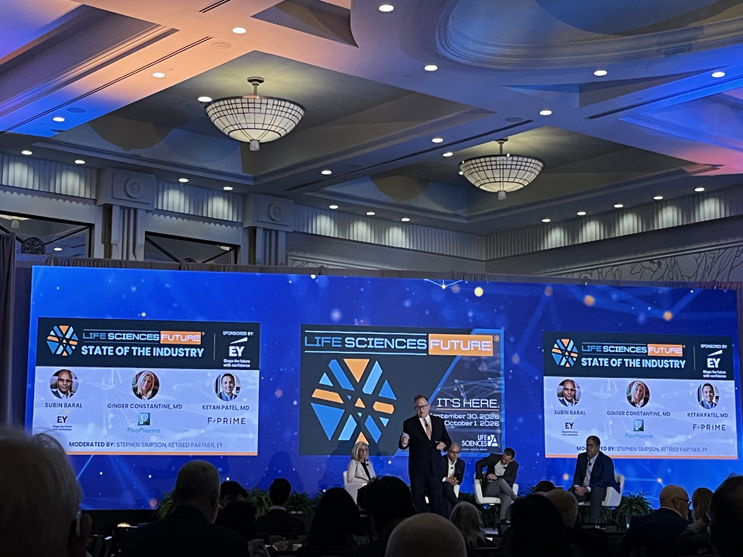
Earlier this week, I attended Life Sciences Pennsylvania (LSPA)’s Life Sciences Future 2026 conference in King of Prussia, PA. While the conference covered the broader life sciences industry, many of the conversations directly connected to the challenges facing cell and gene therapy.
Financing, M&A, clinical development, global competition, pricing, and access are not separate issues for CGT companies. They increasingly determine which therapies advance and which companies can sustain development. The message at the conference was that capital and opportunity are returning, but expectations have changed.
Keep Following the Money
According to the expert panelists, the financing environment is improving, but capital is not returning equally across the industry. They described investors as increasingly selective with greater emphasis on differentiated assets, clinical evidence, and experienced management teams. Later-stage companies with clinical data are attracting larger financing while early-stage biotech fundraising remains difficult.
That distinction matters for CGT. Cell and gene therapies can require substantial investment before meaningful clinical validation is available. Companies therefore need to think about financing alongside development strategy. The question is no longer simply whether a therapy works. Companies increasingly need to show why their program deserves capital at each milestone and what makes the opportunity meaningfully different.
Build Commercial Thinking Earlier
The gene therapy discussion drove home another issue. Developers need to be selective about the indications they pursue, particularly when targeting larger markets. Pricing also needs to enter the development conversation early. That is important in CGT, where manufacturing complexity and treatment costs can create commercial challenges long before approval.
A compelling clinical program still needs a sustainable path into the healthcare system. Developers need to consider the addressable population, treatment economics, competitive landscape, and reimbursement environment while making development decisions. For CGT developer companies, indication selection cannot happen inside a clinical-development vacuum.
Follow the M&A Signal
The M&A discussion was one of the sessions I found particularly relevant to CGT. The panel cited more than $250 billion in life sciences M&A activity during the first eight months of 2026. The activity is also increasingly extending beyond massive transactions with greater consolidation across the middle market.
Companies are pursuing assets earlier in development. Pre-Phase 3 assets represented approximately 60% of deals discussed compared with a 10-year average of 43%. For CGT developers, that changes how companies might think about partnerships and strategic transactions. Clinical validation remains critical, but a program does not necessarily need to reach commercialization before becoming strategically valuable. A differentiated asset addressing a meaningful pipeline need can attract interest earlier.
Mind the Growth Gap
The broader biopharma market is creating another opportunity for innovative biotechnology companies. The panel cited approximately $407 billion in potential revenue at risk among the top 25 biopharma companies through 2032. Internal pipelines alone are not expected to close that gap. That creates pressure for large biopharma companies to find external innovation. CGT is already an important source of that innovation. But companies competing for pharmaceutical partnerships need to understand what potential partners need. A novel modality is not enough. The asset needs differentiation, credible development data, and a path toward commercial relevance. For CGT companies, that makes understanding the broader biopharma pipeline increasingly important.
Do Not Overlook China
China was another major theme throughout the conference, and its relevance extends well beyond companies operating there. Panelists noted that more than half of the alliance dollars discussed were flowing into China, compared with roughly one-third in 2025. They pointed to faster patient enrollment, lower clinical development costs, ecosystem advantages, and government support as contributing factors.
What also stood out was the discussion around innovation. China is increasingly being viewed as a source of novel technologies rather than simply “me-too” assets. That matters for CGT because the competitive landscape is becoming increasingly global. A developer in Pennsylvania is competing within the same innovation ecosystem as companies in Boston, California, Europe, China, and other emerging hubs. The opportunities also come with questions around diligence, legal terms, regulatory considerations, and geopolitics.
For CGT companies, China is not simply a regional issue. It can influence partnerships, clinical development, valuations, and access to technology.
Treat Funding as Development Strategy
The NIH funding discussion offered another lesson for emerging therapeutics. The panel noted that NIH funding remains relatively stable, while fewer applicants are receiving grants. Approximately 13% of applicants were reported as receiving funding. That creates another layer of competition for companies and academic groups developing early technologies.
Companies seeking NIH support need expertise not only in science, but also in the submission process itself. Panelists noted that some applications fail because of technical and formatting issues. For smaller CGT companies operating with limited resources, understanding how to compete for non-dilutive funding can become an important part of development strategy.
Expect a More Selective IPO Market
The IPO market is showing signs of renewed activity, but this is not a return to 2021. The discussion cited nearly 30 IPOs with larger financings concentrated among companies with more mature clinical data. Generalist investors are also returning to biotech. But investors are scrutinizing clinical data and differentiation more closely.
The market is not simply reopening the door to early-stage platforms. Companies increasingly need evidence that their technology can become a differentiated therapeutic product. For CGT developers, that reinforces the importance of milestone planning and capital efficiency well before an IPO becomes realistic.
Think Beyond Pennsylvania
Being at Life Sciences Future in Pennsylvania made this point especially relevant. Pennsylvania has a powerful life sciences ecosystem, but the forces shaping companies here are not local. Capital is global. M&A is global. Clinical development is increasingly global. Technology competition is global. The same pressures discussed in King of Prussia are influencing CGT companies across the U.S. and internationally.
A Pennsylvania-based developer still competes for capital with companies across the country and around the world. It also needs to consider where clinical development can move efficiently, where manufacturing can scale, and where strategic partners are looking for innovation. That is why broader life sciences intelligence matters for CGT leaders.
The CGT Takeaway
My biggest takeaway from Life Sciences Future was that CGT is entering a more selective phase of growth. The capital is there, but companies must earn it. The appetite for innovation is there, but differentiation matters. M&A is active, but buyers are increasingly focused on strategic pipeline needs. And global competition is expanding what it means to build a competitive biotechnology company.
For CGT developers, scientific innovation cannot be separated from commercial strategy. Indication selection, pricing, clinical design, financing, partnerships, manufacturing, and market access all need to connect. CGT does not operate in its own market. It is part of the broader life sciences ecosystem, and the forces reshaping that ecosystem will ultimately shape which therapies reach patients.