
Inside The Next Phase In Autoimmune CAR T From Meeting On The Mesa 2026

By Erin Harris, Editor-In-Chief, Cell & Gene
Follow Me On Twitter @ErinHarris_1
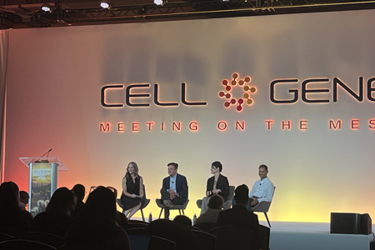
At ARM’s Meeting on the Mesa 2026, the Inside the Autoimmune Revolution session brought together Warner Biddle, CEO of Kyverna Therapeutics; Gwendolyn Binder, Ph.D., President, Science and Technology at Cabaletta Bio; and Dilip Patel, Senior VP, Global Pricing and Market Access Strategy at Autolus Therapeutics. Chaired by Sara Mills, VP AlloNK at Artiva Biotherapeutics, the panel explored what it will take to translate autoimmune CAR T’s clinical promise into real-world treatment options.
Indeed, the conversation has shifted beyond whether CAR T can work in autoimmune disease. As clinical evidence builds, developers must demonstrate lasting benefits, establish value for payers, and build a treatment model that can reach more patients.
Demonstrating Value Beyond the Infusion
Explaining the value of a one-time therapy to payers accustomed to covering chronic autoimmune treatments remains a challenge. Developers need to demonstrate not only clinical responses but also durability and the potential to reduce or eliminate ongoing treatment.
Biddle pointed to patients with severe disease who have experienced significant improvements after a single treatment. For those who have spent years managing their conditions with immunosuppressants, intravenous immunoglobulin (IVIG), and other therapies, durable responses that reduce or eliminate background treatment could fundamentally change their lives.
Dr. Binder highlighted the potential for cost displacement. Existing autoimmune therapies can cost hundreds of thousands of dollars annually without necessarily producing remission. A one-time therapy that changes the course of disease could offer a different economic proposition, but that value must be demonstrated over time.
Patel identified durability as one of the biggest questions he hears from payers. If a company wants a payer to replace years of chronic treatment with a single infusion, the payer needs confidence that the benefits will last. Generating that evidence can be particularly challenging in small patient populations and single-arm studies.
It’s obvious how closely clinical development and market access are becoming intertwined. Demonstrating efficacy is essential, but developers must also establish how long benefits last and what they mean for patients and healthcare spending.
Safety Is Changing the Conversation
Recent safety concerns have added urgency to the discussion. The panelists emphasized that CAR T is not a homogeneous modality. The construct, manufacturing process, and resulting cellular characteristics can influence a product’s behavior and risk profile.
Dr. Binder discussed why manufacturing differences matter, particularly in autoimmune disease, where the risk-benefit calculation may differ from oncology. A product developed for cancer does not necessarily have the same profile when used to treat patients with chronic autoimmune conditions.
That point echoed my conversation with Dr. Panteli Theocharous on Cell & Gene: The Podcast. In my recent article exploring his perspective, I discussed his argument that developers cannot simply carry oncology’s risk tolerance into autoimmune disease, where patients may be functioning reasonably well on existing treatments. The recent safety developments reinforce the need to evaluate each product in the context of its specific risks, potential benefits, and patient population.
This also creates an education challenge. Patients and physicians need to understand that products can differ meaningfully. Safety concerns should prompt closer scrutiny of individual therapies rather than assumptions that every CAR T product carries the same risks.
At the same time, autoimmune patients are not starting from zero. Many have spent years on steroids and other immunosuppressants that carry long-term risks of their own. A cell therapy’s potential benefits must be weighed against that existing treatment burden, not evaluated in isolation.
The Patient Experience Needs to Change
Strong clinical data alone will not ensure that patients can access or will choose these therapies. The current CAR T journey can involve apheresis, manufacturing, conditioning, infusion, and monitoring at specialized centers. For patients typically managed by community-based rheumatologists, neurologists, or other specialists, that process presents significant challenges.
The panel discussed ways to simplify treatment, including outpatient administration, reducing or eliminating preconditioning, improving manufacturing turnaround times, and expanding treatment beyond major academic centers.
Cabaletta’s work exploring CAR T without preconditioning is particularly interesting. Early data suggest this approach may be possible, although dose escalation and additional follow-up remain necessary. If successful, eliminating preconditioning could remove a significant step from the patient journey and make treatment easier to manage.
Scaling Requires a Different Manufacturing Model
If autoimmune CAR T reaches larger patient populations, the traditional, highly manual manufacturing model will be difficult to sustain. The panel discussed automation, CDMO partnerships, and flexible manufacturing strategies as ways to expand capacity without requiring every company to build extensive infrastructure.
Demand may be difficult to predict during the early commercial years, making flexibility especially important. Automation could help manufacturers adjust capacity while maintaining consistency, but scale involves more than producing additional doses. Cost of goods, supply reliability, manufacturing success rates, backup suppliers, and regulatory comparability will all affect access.
Patel emphasized the need to make these therapies both profitable and affordable. Predictable manufacturing will also be critical for treatment centers coordinating patient care around the availability of a personalized product.
Bringing Treatment Into the Community
Ultimately, autoimmune CAR T cannot reach its full potential if treatment remains limited to a small number of academic centers. Expanding access will require more than training additional sites. Physicians need confidence in the therapies, patients need education, and healthcare systems need workable referral pathways, reimbursement models, and manufacturing logistics.
Regulatory considerations are also critically important, including accreditation requirements and how cell therapy can be administered safely outside traditional academic settings.
These things must develop alongside the science. A therapy can demonstrate compelling clinical results and still struggle to reach patients if the infrastructure needed to deliver it is not ready.
The Next Phase Will Be About Access
This session made clear that autoimmune CAR T is entering a new phase. Developers must demonstrate durable clinical benefits, establish product-specific safety profiles, and show payers why a one-time therapy can justify its cost.
They must also simplify the patient journey and develop manufacturing systems capable of supporting larger populations, including through expanded community-based treatment.
The science may get autoimmune CAR T across the first hurdle. But as the panelists made clear, safety, durability, affordability, and access will determine how far the field goes.