
The Systems And Choreography Needed For Grade B ATMP Material Transfer
A conversation with Alexis Stachowski, Regeneron
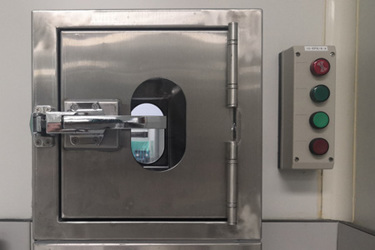
Advanced therapy medicinal products (ATMPs) have inverted the high-volume, low-frequency material transfer model we know from traditional biologics. Because cell and gene therapies more often come in tiny batches, the frequency of material entries into Grade B cleanroom environments has turned the material airlock (MAL), quite literally, into a bottleneck.
At the very root of the problem, typical MAL geometry can't keep up with the volume and variation of material passing through them. Layered decontamination steps add more time, and, in facilities where one MAL serves several cleanrooms, even the most militant scheduling won't prevent queues from choking up.
Alexis Stachowski has been dealing with this pain point for much of her career. She spoke at the recent 2026 ISPE Aseptic Conference where she described why Grade B transfers are substantially less forgiving for ATMPs than for mAbs or vaccines and where some of the biggest SOP drifts happen with so much riding on human operators.
After her talk, she offered to answer questions about infrastructure, best practices, and common stumbling blocks to watch out for.
What makes Grade B material transfer so much more challenging for ATMPs compared to simpler biologics like mAbs or vaccines?
Stachowski: Grade B material transfer presents heightened challenges in ATMP manufacturing because the products themselves, and the processes used to make them, are inherently more vulnerable to contamination than traditional biologics such as mAbs or vaccines. ATMPs encompass gene therapies, cell therapies, and tissue‑engineered products, all of which involve deliberate manipulation or modification of biological properties for therapeutic use.
That manipulation requires extensive hands‑on processing, open or semi‑open manipulations, and direct handling of growth media, cells, or tissues. From a microbiology perspective, this is where the vulnerability becomes clear: the same conditions that promote cell expansion and viability (rich nutrients, warm temperatures, and extended incubation times) also create an ideal environment for microbial proliferation.
Unlike mAbs or vaccines, which are produced in large, contained, and highly automated bioreactor systems, ATMPs rely far more on manual aseptic processing steps, many of which occur in biological safety cabinets (BSCs) located in Grade B environments.
As a result, even small lapses in double‑bag removal, glove contamination, disinfection contact times, or airflow disruptions can directly impact product sterility. The diversity and complexity of ATMP materials, including patient‑specific components, multilayered kits, viral vectors, and custom reagents, add another layer of variability. Many components are not available pre‑sterilized, require multi‑stage decontamination, or have wrapping configurations that must be opened in a specific sequence to avoid contamination transfer.
Combined, these factors make ATMP Grade B material transfer both higher risk and less forgiving than traditional biologics. The operator and the manual decontamination of items going into the Grade A environment are frequently the final barrier between environmental contamination and a highly permissive biological system, which elevates the importance of consistent, qualified, and tightly controlled material‑transfer processes.
Cell and gene therapies flip the throughput/volume calculation with many small batches moving through production faster. What bottlenecks does this create, and how do you address them?
Stachowski: Traditional biologics rely on large stainless‑steel campaigns with a few long‑running batches. ATMPs invert that model: they consist of many micro‑batches, each with its own kits, consumables, and batch‑specific reagents. That frequency dramatically increases the number of material entries and the operator touchpoints per week.
The biggest bottleneck I’ve seen is congestion in airlocks, pass‑throughs, and Grade B staging areas. Even a well‑designed transfer SOP can fail under the volume of frequent, high‑mix materials.
Addressing these bottlenecks is as simple as:
- Mapping all contamination vectors associated with each transfer step to simplify flows and remove unnecessary items.
- Standardizing wrapping configurations so operators aren’t forced to improvise double‑bag removal.
- Using pre‑staged kits and approved‑materials lists to cut down on ad‑hoc transfers.
- Optimizing sequencing and scheduling so batch‑specific materials arrive in a predictable, leveled pattern rather than in bursts.
- Implementing automated or semi‑automated decontamination at critical points (e.g., VPHP pass‑throughs) when manual disinfection becomes the rate‑limiting step or as determined by the site’s contamination control strategy.
The goal is to maintain the aseptic environment’s integrity without sacrificing ATMP responsiveness and speed, which requires well-trained staff, procedural discipline, and strategic engineering controls.
Your talk presented several case studies. Can you share some of the lessons learned from those examples at Regeneron?
Stachowski: While I can’t share Regeneron‑specific lessons learned, I can share what I’ve struggled with throughout my career and the lessons that have consistently emerged across multiple ATMP and biologics programs. Several themes come up repeatedly in material transfer failures and lapses in aseptic practices:
- Operator consistency remains the largest variable in material handling. Even highly trained operators experience technique drift such as deviations in application, like wiping patterns change, contact times are shortened, and double‑bag removal becomes improvised unless visual job aids and standardized positions are built into the process. This mirrors what we highlighted in the presentation: material transfer is a human‑reliant step, and therefore inherently vulnerable to variability.
- The sporicidal step is nonnegotiable. Across sites and roles, I’ve seen repeated overconfidence in the use of 70% IPA. Data consistently show that 70% IPA alone cannot achieve meaningful log reduction on complex packaging materials, porous pouches, or high‑bioburden surfaces, whereas a sporicidal agent provides a more robust decontamination step from a chemical perspective.
- Clutter and overloading of Grade A/B spaces is a major contributor to contamination ingress. When operators bring too many materials into the BSC or overcrowd an airlock, airflow patterns are disrupted and mechanical transfer becomes more likely. This is one of the most common, and preventable, failure modes in ATMP processing.
- Inconsistent wrapping configurations create multiple opportunities for error. Across my career, this has been a recurring pain point. When suppliers, warehouse teams, or different production groups package materials differently, operators lose the predictability required for controlled unbagging and disinfection. Standardization here drives significant risk reduction.
- Risk mapping reveals hidden vulnerabilities that historical practice overlooks. Using structured models like Likelihood × Severity × Detectability often exposes transfer steps that intuitively feel low-risk but have high risk priority numbers (RPNs) due to operator proximity, airflow disruption potential, or surface‑to‑surface contact. These insights are crucial in ATMPs, where processes and materials change frequently.
Collectively, these lessons shaped how I approach material‑transfer design: through standardization, simplification, and evidence‑based controls. Whether in traditional biologics or ATMPs, the same themes repeat: material transfer succeeds when variability is minimized, decontamination is science‑based, and operator burden is reduced through thoughtful design.
What are the most common challenges you see in airlock design that compromise aseptic integrity, especially when transitioning existing cleanrooms for ATMPs?
Stachowski: The most frequent design challenges include:
- Airlock or pass-through sizing that doesn’t match ATMP material volume: Legacy spaces built for low volume or infrequent material transfers can’t handle the high traffic from ATMPs, leading to crowding (risking mix-up) and mechanical transfer events (from inadequately decontaminated items).
- Bidirectional and shared flow paths for personnel and materials: ATMPs, just like traditional biologics, require segregation of “in” and “out” flows, and “clean” and “dirty.” Many legacy facility airlocks were not originally designed for this level of flow discipline.
- Insufficient staging surfaces: Without defined clean/dirty demarcation zones, materials often drift into shared surfaces, increasing cross‑contamination risk.
- Inadequate provisions for decontamination: Older airlocks often lack space for VPHP generators, integrated pass‑throughs, or even ergonomic wiping stations.
Material transfer in ATMP facilities requires rethinking not just air changes and pressure but workflow geometry including the physical choreography of how operators move, place, disinfect, and unbag materials.
What criteria justify investment in automated pass-through decontamination systems?
Stachowski: Investment in automated pass‑through decontamination systems should never be a default decision; it should be driven by the specific contamination risks identified within a site’s contamination control strategy (CCS) and the operational realities of the ATMP process. Because ATMP facilities vary widely in product type, batch cadence, material complexity, and manual aseptic workload, the need for automation is highly situational.
The CCS provides the framework for determining when manual disinfection is no longer adequate to control risk. If risk assessments reveal that operator‑dependent steps such as wiping, double‑bag removal, or glove management have high likelihood or severity ratings, or if environmental monitoring trends show recurring ingress linked to material movement, the CCS may justify adopting automated, validated decontamination technologies.
Key circumstances that often support investment include:
- Manual disinfection is becoming a bottleneck that limits the throughput of frequent, highly vulnerable ATMP batches.
- There is a high risk of operator interaction, where human variability jeopardizes aseptic integrity even with strong training and procedural controls.
- Material complexity or volume exceeds what can be reliably disinfected manually, especially multilayered kits or items with irregular/porous surfaces.
- There’s a CCS-driven need for enhanced reproducibility, particularly when a site must demonstrate higher maturity or harmonize practices across suites or facilities.
- There is data‑driven evidence, such as EM trends or deviations, for contamination associated with transfer steps.
By grounding the decision in the CCS, organizations avoid “technology for technology’s sake.” Instead, they ensure capital investment is tied to documented risk, operational need, and scientifically justified improvements in contamination control that is fully aligned with Annex 1’s expectation that material transfer controls be risk‑based, defendable, and integrated into the overall strategy.
How has Annex 1’s emphasis on contamination control strategies changed the way we design, document, and validate material transfer routes?
Stachowski: Annex 1 has made material transfer a core CCS element rather than a supporting procedure. The impact has been significant:
Design:
- Transfer routes now require intentional mapping of contamination vectors, pressure differentials, wrapping configurations, and disinfection methods.
- Facilities are increasingly designed with dedicated pass‑throughs, defined clean/dirty zones, and one‑way flow paths.
Documentation:
- Material transfer sequences must be justified and traceable to risk assessments, not historical practice.
- Wrapping/packaging configurations, wiping techniques, contact times, and sequencing are documented with the same rigor previously reserved for Grade A manipulations.
Validation:
- Annex 1 elevates expectations around demonstrating effective contamination control.
- This requires qualifying sporicidal efficacy through traditional disinfection efficacy testing and in-situ field trials, including demonstrating reproducibility of manual disinfection practices through data.
- Facilities must be able to show that their material transfer process forms part of an integrated, data‑driven CCS.
Ultimately, Annex 1 shifts the mindset from “move materials into cleanrooms” to “maintain sterility assurance at every point those materials move.”
Editor's note: Responses are the expert's own opinions, based on their own experiences, and are not the opinion or reflection of Regeneron Pharmaceuticals.
About The Expert:
 Alexis Stachowski is an Associate Director of Quality Assurance Microbiology at Regeneron Pharmaceuticals with extensive experience in contamination control, aseptic processing, and microbiological quality systems. She is a recognized industry contributor to PDA and ISPE initiatives, with a focus on contamination control strategy, sterility assurance, and science‑based risk management.