
The Long Road To U.S. Vaccine Manufacturing

By Louis Garguilo, Chief Editor, Outsourced Pharma
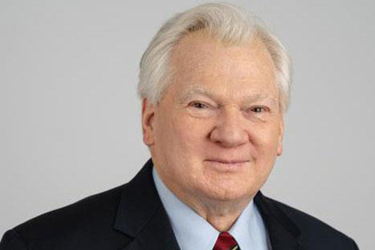
Notice anything peculiar about the partnerships formed by Atlanta, Georgia-based GeoVax, Inc., a clinical-stage biotech specializing in the development of immunotherapies and vaccines?
- Manufacturing Partnerships: maintains a CDMO relationship with Oxford Biomedica PLC (Oxford, UK), and collaborations with Oxford Biomedica (France), with facilities in Strasbourg and Lyon.
- Technology Licensing: has a broad licensing agreement with ProBioGen AG (Berlin, Germany) to utilize their AGE1 continuous avian cell line for the manufacture of MVA vaccines.
- European Collaborations: collaborates with multiple European-based service providers and UK academic partners.
That’s right. Nothing stateside.
CEO David Dodd sings the praises and is abundantly grateful for these program-enabling relationships. At the same time, he harbors lingering disappointment.
From the outset of the formation of GeoVax, the company has desired to work with U.S.-based CDMOs.
Yet every step of the development path – an arduous number of years – GeoVax’s promising vaccine technology has been stymied by a manufacturing hurdle no U.S. CDMO could help overcome.
Dodd, an Outsourced Pharma Advisory Board member, detailed for us what his struggle to stay stateside has been like.
Talk Creates No Vaccines
Dodd is not politically partisan and not hesitant to talk to anyone in Washington about biopharma manufacturing policy. Unfortunately, all he’s found there is just that. Talk.
Politicians and others chant “America First” for biomanufacturing; hearings are held; legislation introduced.
“You inevitably have to deal in certain realities,” says Dodd. For GeoVax, that includes trying to get U.S.-based help to manufacture a Modified Vaccinia Ankara (MVA) vaccine.
“No domestic CDMO manufactures MVA,” Dodd told me. “We were forced to go outside the U.S.” This battle to stay onshore has been a core of the GeoVax story for several years.
MVA — a highly attenuated vaccinia strain developed through hundreds of passages in avian cells — is “exquisitely safe for human use,” and uniquely suited for multi-antigen constructs. Dodd believes it’s a technology vital to U.S. health security.
“Currently, it’s a complicated manufacturing process,” Dodd explains. Traditionally it relies on chicken embryonic fibroblasts (CEF) and all that entails, including months-long cycles and limited scalability.
There is effectively one supplier of commercial-scale MVA vaccine: Bavarian Nordic in Denmark. Its product is the only MVA vaccine in the U.S. Strategic National Stockpile, and the only one broadly approved globally.
For the U.S. Department of War, reliance on a single, foreign-based supplier for MVA vaccines introduces operational risk: uncertainty in surge availability, dependency on transatlantic logistics during crisis, and reduced flexibility to support rapid troop deployments, humanitarian missions, or forward-stationed forces.
“It’s a monopoly worldwide,” Dodd says. “We plan to end that.”
But that requires effective large-scale manufacturing. “We talked to every CDMO with requisite MVA experience,” Dodd says. “None were in the U.S.”
GeoVax was forced overseas.
Vaccine Solutions Limited
GeoVax ultimately partnered with Oxford BioMedica, whose manufacturing arm includes the former ABL facilities in France, and deep MVA experience.
But perhaps a more revealing episode involves a Chinese CDMO.
At one point, GeoVax was prepared to use an experienced China-based CDMO with a facility in the U.S. for fill-finish. “The CEO took a personal interest in the project,” says Dodd. “They were impressive.”
Not exactly a U.S. partner, but as close as GeoVax could get.
Then a surprise upset that vaccine cart, one perhaps not atypical in the U.S.
The fill-finish facility was in a local jurisdiction that would not allow the importation of viral products such as MVA. The CDMO itself seemed unaware of the restriction until late in the discussion process with GeoVax.
“It cost us a year,” Dodd says.
There was an alternative. This same CDMO had a facility in China ideal for GeoVax’s manufacturing needs. However, Dodd felt he could not accept “the generous deal” they offered.
“Given the geopolitical climate, and our goals, we determined the appropriate decision would be to avoid such a relationship in China,” he says.
So here’s our irony:
A U.S. biotech developing a vaccine platform – one that could prove central to biodefense – could not manufacture in the U.S.
And it felt it could not in China, because of U.S. policy.
Meanwhile, says Dodd, Washington talks as if they understand the biopharma manufacturing challenges facing U.S.-based developers.
He has taken this message to senators and members of Congress. “They talk a good game about onshoring of biomanufacturing and helping domestic biotechs,” he says. “And then I point out there’s not a domestic CDMO that an organization like ours can manufacture with.”
Moreover – somewhat galling – Dodd “reminds” politicians “the U.S. taxpayer has funded more than $2 billion to support the only manufacuter of this type of vaccine: Denmark’s Bavarian Nordic.”
“That’s taxpayer money,” he emphasizes, “passed through BARDA [part of the Department of Health and Human Services tasked with procuring vaccines to address health security threats].”
“Bavarian Nordic is a great company,” Dodd says earnestly. “The issue is their virtual monopoly, and they are ex-U.S. We plan to alter that situation.”
He mentions the Mpox outbreak in 2022. Vaccine doses had to be diverted from the U.S. Strategic National Stockpile, “which as a result, was severely depleted, taking the next two years to rebuild. In 2024, another outbreak caused further depletion of the stockpile.”
“If I were a policymaker,” Dodd says, “and I knew we are forced to manufacture in Europe because there isn’t a U.S. CDMO to work with, I would ask, ‘Where’s our serious action and commitment to U.S. biosecurity?’”
In-House Manufacturing Breakthrough
Despite the long-endured situation, GeoVax has not capitulated. It employed internal knowhow to validate a new technology which appears to finally overcome the legacy MVA manufacturing challenges.
This shift is “central not only to competitiveness but also policy leverage.” Dodd suggests with funding support, GeoVax could accelerate validation and scale up in partnership with a CDMO, establishing commercial-scale MVA-manufacturing domestically.
Meanwhile, he European Medicines Agency (EMA) recently granted GeoVax an expedited path for its poxvirus (e.g., mpox and smallpox) vaccine (GEO-MVA), requiring only a single Phase 3 immuno-bridging study against Bavarian Nordic’s product, as a basis for EMA marketing authorization. This trial is scheduled to start during H2 2026.
If successful, GeoVax would become the second global supplier of MVA vaccine.
And there is some encouraging news. U.S. manufacturing may finally be within reach. Oxford BioMedica now has facilities in Bedford, Massachussets and Durham, North Carolina.
“One way or the other,” Dodd says, “GeoVax will have U.S.-based manufacturing.”