
Moving Leukopaks From GTP To GMP Is One Cell Therapy Trend To Watch In '26
A conversation with Jennifer Chain, Ph.D., CABP, cellular starting material expert, and Life Science Connect's Executive Editor Jon O'Connell
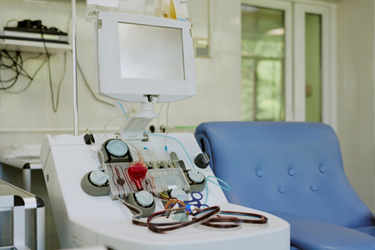
If 2025 felt like a stumbling block for the cell therapy sector, the root cause might be sitting in the very first step of the supply chain. While the industry has focused heavily on manufacturing automation and commercial scale-up, a critical variable remains dangerously undefined: starting material quality.
Leukopak quality has emerged as a silent disruptor in the push for commercialization. Industry consultant Jennifer Chain of CSM Consulting explains that the industry’s current definition of a "healthy donor" is often insufficient for the rigors of therapy manufacturing. The disconnect lies in the regulatory gap between good tissue practice (GTP), which governs collection, and GMP, which governs the therapy.
As the industry looks toward 2026, the conversation must shift toward the necessity of "super donors" and the urgent need for standardization in donor specifications. We spoke with Chain to find out why relying on CDMOs to fix procurement issues is a mistake, why AI isn’t ready to solve donor selection yet, and why finding the right donor is about to become the next major bottleneck for allogeneic therapies. The transcript has been edited for clarity.
In 2025, did we see clinical holds or manufacturing failures traceable to what you've called a regulatory gap in donor material collection? Specifically, I'm referring to the GTP standard when we should be using GMP.
Chain: I don't know if we've seen the clinical holds yet, but I think as more clinical outcomes start to come out from allogeneic cell therapies, we're going to start seeing variability that will be hard to explain. There's definitely going to be variability based on patient response, but I think some of the variability is going to be from the starting material.
The healthy donor is not as healthy as we thought. They're smokers or they have some underlying chronic inflammation or something like that. There are things that need to be defined on the donor side that say, "This makes a good candidate for collection for therapy manufacture."
Specifications of the material need to be better defined to say, "This is the acceptable range of hematocrit, contaminating granulocytes, platelets, and so on, so that this product will successfully perform in manufacturing."
People are all over the place with how to define donors and material. When it comes to GMP versus GTP, the collection of the tissue product and the blood product is governed by good tissue practices, but the GMP part is on the therapy end. Developers with INDs are defining what GMP means and then governing their collectors and their suppliers on how to achieve that. If they define GMP starting material as from a donor who is negative for human herpes virus 6, 7, and 8, then that becomes a GMP requirement that's imposed on the collector to make sure that the donor meets that requirement. It becomes a specification.
I think many of the INDs are defining the GMP process, but they're also all over the place. One IND says these are the requirements for the donors and the material, which looks different from another IND. Now these two developers go to the same starting material collector and say, "You need to follow our GMP process." And then the other one says, "Well, you need to follow our GMP process, and they're different." They're probably not drastically different, but they're different enough to make things chaotic and difficult for the collector.
What I'm hoping to see over the next few years is a consolidation of starting material requirements that go into the IND so that most INDs are saying the same thing.
Have you noticed more sponsors training staff or deploying resources to achieve GMP in apheresis centers?
I think the apheresis centers focused on GTP because that's what they know and they add whatever requirements are needed for the IND. Many of those requirements are going to be paperwork-based. Is there traceability in their training? Do they follow good documentation practices? Things like that.
A collection center that's not yet GMP-compliant needs to be working toward that. There are probably universal characteristics that make them GMP-compliant for every single one of their sponsors. And then there will occasionally be things, like for example, the HHV testing or sterility testing that might be required by one sponsor or another.
Collectors do need to be moving toward GMP compliance with the sponsor. I think by now, the collectors should know what they need to do. A lot of it is related to FACT accreditation or AABB accreditation. You don't have to be accredited, but following the accreditation process is going to get you really far, because the sponsors are looking for collectors that are accredited because they know they're going to meet most of their requirements.
The movement toward being more GMP compliant comes down to conversations with sponsors and what they need.
We saw a lot of market consolidation among CDMOs and suppliers in 2025. Has this consolidation improved this move toward standardization? Has it created new supply chain bottlenecks?
Yes. There are definitely some CDMOs that order starting materials because they're doing process development. But the procurement of the starting material is almost always a responsibility of the sponsor.
Even if they're not doing any scale-up or process development in their lab — they've moved to a CDMO — they're usually responsible for ordering that starting material to the CDMO.
I think the consolidation of the CDMOs is good because they were probably overextended. There were too many CDMOs for the number of assets being pursued.
When it comes to starting material standardization, I think that still is a sponsor responsibility. And if they're doing work at the CDMO where they're getting ready for manufacturing, then hopefully they've defined the specifications they need.
I don't think all of them have. Some of them have still buried their heads in the sand to avoid the fact that they need to define those specifications. It's going to take time for the sponsors to realize that their manufacturing processes aren't working that well, and they need to go back to the drawing board with the starting materials and say, "Let's limit the kinds of donors. Let's limit the specifications so that we can get a more efficient manufacturing process." That will lead to standardization.
You've made the case for better control of leukopak attributes, specifically around donor demographics, like BMI, age, and lifestyle. Did the industry make any real progress in 2025 on defining universal donor specifications, or is every biotech still treating their donor criteria as a proprietary secret?
There are a couple of groups that are insistent about narrowly defining their donor specifications. They're actively working on it. There are some that don't even know they need to do it. And there are some that won't do it or don't want to do it because they want their manufacturing process to be flexible to adapt to any starting material specification, so they don't want to say what the material should look like. They just want to get what they get and be able to use it.
I think that's a mistake. I think that's going to lead to a lot of issues, but that is one approach. And the reason why some groups are doing that is because they don't have trust in the collectors to ever meet specifications or to be standardized. And so instead of waiting around for the collection industry to standardize, they're just moving on and trying to adjust at the manufacturing phase.
Again, I think that will be a mistake in the long run and they're going to have to fix it in the end. So that's why I really hope to see the collection industry move more quickly toward standardization, because that's going to help the entire cell therapy industry.
Artificial intelligence touches everything. Is it helping with donor selection or validation? Is it still overhyped?
I don't think it's overhyped at all. I think it's needed, but it's almost like it's too early. We need to be thinking about how to use AI to correlate donor attributes with manufacturing and clinical outcomes. We need to know how we're going to do that, but there's not enough data to actually be able to do it because we need the clinical outcomes.
We have to have a lot of donor data, and I think there's just not been enough data gathered yet. We don't know which donors are smokers, and we don't know which donors have had chronic inflammation and which donors have had a history of cancer in their family.
There's just so much we don't know about the donors. If we had that information, if we had functional assay results and flow cytometry results, if we had all of that data, and then we also had a lot of clinical outcomes, we could start correlating all of that, but it's just not there yet.
Some forward-thinking centers are trying to gather that data. They're trying to ask a lot of questions and they're trying to make those correlations using AI and machine learning tools. And so, I think we need to do that. We need to employ that in the donor selection process, but I don't think we're ready to make any conclusions.
As we see more allogeneic therapies inch toward commercialization in '26, do you foresee a crunch in high-quality donor availability? Do you predict scarcity of the so-called super donors?
I do predict a scarcity in super donors, but I think it's necessary. Not everybody's going to be a super donor. Imagine the dozens and dozens of checkboxes that make you a super donor.
Not only do you have to have the right demographics, the right function of your cells, the right CMV status, the right blood pressure, and the right HLA type, all these sorts of scientific things, but you also have to be willing to come regularly to donate. You have to be willing to follow the instructions about what activities you can and can't engage in. You have to be willing to sit there for three to five hours.
And so, I think it's going to take a long time to find those super donors, and so I think they're going to be very rare. If you're only screening blood donors, I would imagine one or two out of 10 blood donors at the most would fully qualify for regular leukopak donation to make commercial therapies.
I think we need to scour the country to find these donors. And when we find them, I think we need to secure them as well as possible through good compensation and by really connecting them to the mission of treating cancer and autoimmunity. They really need to understand what they're participating in.
I see that there's going to be a crunch, but we need to do a lot more to find the right donors.
About The Expert:
 Jennifer Chain, Ph.D., CABP, is a cellular therapy expert with more than 25 years of experience in T cell immunology, product development, blood banking, and consulting. She holds a Ph.D. in immunology and a Certified Advanced Biotherapies Professional credential from the Association for the Advancement of Blood & Biotherapies (AABB). She currently works as a consultant in the cellular starting material space, helping blood centers and cell therapy companies develop CSM collection and procurement programs and donor screening strategies. From 2016 to early 2024, she led efforts to collect RUO and GMP-compliant leukopaks and bone marrow from more than 1,000 healthy donors and developed novel blood- and cell-based culture materials for early-stage cell therapy companies. She volunteers and consults for AABB, where she engages in educational program development, strategic planning, and advocacy efforts in the field of cellular therapy. Reach her on LinkedIn or CSM Consulting’s website, www.cellsmatter.com.