
Improving Next-Generation Sequencing Workflows With Droplet Digital PCR
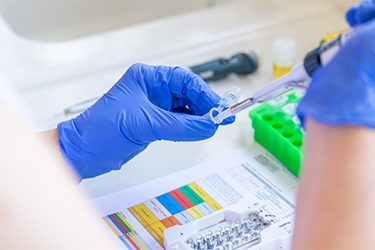
Next-generation sequencing (NGS) is a cornerstone of translational research, yet achieving consistent read depth and uniform coverage remains difficult when working with low-input or degraded samples like FFPE tissue and liquid biopsies. Droplet Digital PCR (ddPCR) technology offers a powerful solution by providing absolute quantification of nucleic acids without the need for standard curves.
Integrating this technology into the NGS workflow addresses critical bottlenecks in library preparation and quantification. By partitioning samples into thousands of nanoliter droplets, researchers can reduce competition between high- and low-abundance templates, preserving sequence diversity and limiting amplification artifacts. Furthermore, this approach provides a rapid, cost-effective method for the orthogonal validation of rare variants and longitudinal monitoring of predefined targets. Explore how a hybrid workflow can improve sequencing efficiency and confidence in your genomic findings.
Get unlimited access to:




Enter your credentials below to log in. Not yet a member of Cell & Gene? Subscribe today.