
Genome Engineering Of Hematopoietic Stem Cells To Treat Blood Cancers: A Discussion With Vor Biopharma's Dr. Robert Ang
By Life Science Connect Editorial Staff
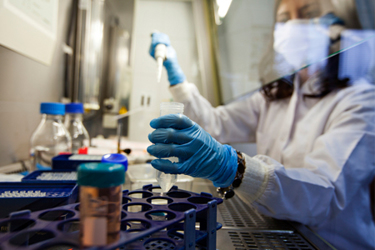
The revolution in CAR-T and other cell therapies enabling more targeted treatments for rare and intractable diseases has been largely driven by genome editing. By changing the genetic sequence of a cell, scientists can achieve a wealth of new functionality – or even resistances – for the cells used in novel advanced therapies, paving the way for next-generation treatments that offer better outcomes for patients in need.
While many of these therapies have been able to achieve results by wiping out specific targets in non-critical cells such as B cells, treatments for diseases involving more crucial cells require entirely new approaches aimed at preserving those cells in the face of potential toxicity. Dr. Robert Ang, CEO of Vor Biopharma, sat down with Cell and Gene: The Podcast host Erin Harris to explore what’s in store for hematopoietic stem cells, and about Vor’s pipeline in particular, including its lead asset for the treatment of acute myeloid leukemia (AML) and other blood cancers.
Genome Engineering HSCs – Vor’s Trem-cel
Vor, a cell therapy company that combines a novel patient engineering approach with targeted therapies to provide solutions for patients suffering from hematological malignancies, is “based on the radical though simple idea” that normal cells can be protected using genome engineering techniques. Vor’s focus is on hematopoietic stem cells (HSCs), immature cells found in peripheral blood and bone marrow that are valuable cell therapy building blocks owing to their multipotency and capacity to regenerate. “By protecting these cells, we can create new treatments for cancer patients and make cancer cells vulnerable in a post-transplant setting,” Ang explained. The ultimate goal of Vor’s portfolio of assets is to cure patients who would otherwise relapse in their disease, he added.
In liquid tumors, stem cell transplant is often a core component of the standard of care. This is because transplant occurs in conjunction with powerful chemotherapy and radiation approaches that wipe out cancer cells – and a patient’s bone marrow, the source of every blood and immune cell in the body. “The idea 50 years ago was to take cells from a donor, either a relative or a matched stranger, and use them to replace the bone marrow,” he said. “Those cells essentially live on in perpetuity and become part of the patient.”
This standard of replacing a patient’s destroyed and irradiated bone marrow has remained largely unchanged since its introduction. This paradigm is what Vor hopes to change by pioneering next-generation stem cell transplants using genome-engineered cells that are protected from therapies otherwise toxic to new bone marrow. Vor’s lead HSC product candidate, Trem-cel, works by deleting a particular gene called CD33, a target expressed strongly on cancer cells. This approach allows agents that target CD33 to attack cancer cells without also attacking bone marrow, Ang explained, positioning it as a unique approach that furthers the potential of CD33 as a therapeutic target. “This way, you should kill the cancer, but you should also preserve the bone marrow that would otherwise be wiped out.”
Enabling Next-Gen Stem Cell Therapy
In genome engineering, the manipulation of a cell, like the deletion of CD33 in a hematopoietic stem cell, is carried on by that cell’s progeny. To achieve its “silencing” of CD33, Vor uses CRISPR/Cas9 to precisely cut cells’ DNA and let natural DNA repair processes close the loop. The result is otherwise functional HSCs with no CD33 gene, in perpetuity. “Hematopoietic stem cells are very different from the types of cells you would normally gene edit, such as T cells,” Ang said. T cells are small, durable, and replicate very quickly. In contrast, hematopoietic stem cells live in bone marrow for much longer – often decades – and are very large and fragile, replicating far less frequently. “Not only do you have to manipulate them differently, but they use different gene repair mechanisms.”
Vor has built its entire platform on a deep understanding of HSC biology, the genome engineering strategies necessary to optimizing those cells to withstand treatment, and the CAR-T therapies that will serve as a complement to its HSC products. “What do patients need in a next-generation stem cell therapy? They need something that is high quality, that contains all the early progenitor cells and the stem cells they need to repopulate their blood systems, and they need a sufficient number of those cells to engraft,” he explained. Importantly, all this must be accomplished within a timeframe that meets the existing standard of care in order to align that treatment with patients’ myeloablation. Doing so means building a robust manufacturing process with a quick turnaround and all the necessary quality elements built in to ensure a sufficient number of high-quality cells. “What we’re doing is essentially a single genome edit, and we’ve put in all the quality criteria we need in the manufacture of these cells,” he said. “What we’ve ended up with is a manufacturing process that takes somewhere in the range of two to three days.”
Vor’s lead asset, Trem-cel (formerly VOR33), is currently undergoing Phase 1/2a clinical trials. To learn more about Vor’s portfolio, click here.