
Enzyme Activity As A Surrogate Potency Marker In Cell Therapy
A conversation between Alexandra Strtak at BlueRock Therapeutics, and Life Science Connect's Jon O'Connell
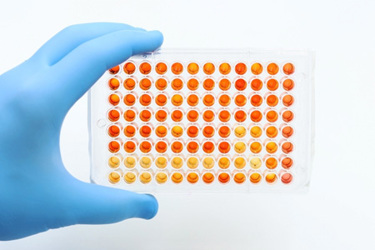
Enzyme activity may offer a faster, more sensitive alternative to the time consuming and blunt standard of cell-based assays for measuring potency in allogeneic stem cell-derived therapies.
Using a biochemical assay, scientists at BlueRock quantified enzyme activity required for dopamine synthesis as a surrogate potency marker for the Parkinson's treatment bemdaneprocel, an allogeneic pluripotent stem cell-derived therapy.
The enzyme activity assay can differentiate between on- and off-target batches identified using culture-based potency assays and other analytical characterization methods, according to a BlueRock poster describing the approach. BlueRock also suggests the biochemical assay may be more sensitive to batch-to-batch differences than culture-based potency assays, which require extended culture periods and exhibit greater variability. In the BlueRock data, enzyme activity measurements showed a narrower range of variability across batches, potentially making subtle differences easier to detect.
BlueRock's findings join a growing movement toward alternatives for cell-based assays. To help us understand more about what a biochemical approach to measuring potency looks like, we asked BlueRock's Alexandra Strtak, an analytical development scientist who worked on the assays, some questions.
What critical shortcomings of cell-based potency assays are driving innovation in surrogate solutions?
Strtak: Cell-based potency assays often require extended time in culture, leading to significantly longer assay turnaround times (i.e., several days to weeks), increased operator hands-on time, and higher reagent and material costs compared to biochemical alternatives. Cell-based assays also carry the risk of lost runs due to contamination events and the potential inability to collect potency data for off-target batches that don’t replate or grow well. (Generating potency data for off-target batches is still important to inform analytical development.) Finally, cell-based assays are also inherently more variable than biochemical assays and can therefore be less sensitive to small batch-to-batch differences.
Your assay measures activity at one point in the dopamine pathway. Can you talk through how you chose that step, and whether other points in the pathway gave you different information during development?
Strtak: In choosing our target biomarker, we started with gene expression data for several (>20) batches of bemdaneprocel. We chose a candidate marker that was expressed differentially in batches that were identified as atypical based on various analytical characterization methods. These atypical batches performed differently from typical batches in our established matrix of cell-based potency assays. Some of our criteria for a surrogate potency assay included correlation with the existing cell-based potency assays, ability to be predictive of atypical or off-target batches, and high enough activity in typical or on-target batches to establish a strong understanding of baseline enzyme activity to eventually enable setting a threshold or specification for batch release. We hypothesized that the activity of this enzyme would meet those criteria because there was a clear difference in the amount of transcript for the gene encoding the enzyme between batches identified as typical vs. atypical.
The data shows nuances in enzyme activity that the 33-day culture assay doesn't readily pick up. What is that sensitivity actually catching? Is it flagging maturation differences, or are there other batch variables the biochemical assay is more responsive to?
Strtak: We believe these small differences in enzyme activity are reflective of differences in maturity, as our biomarker is a marker of maturity in dopaminergic neuronal cells. Additionally, we have shown association between enzyme activity and maturity for batches of varying levels of maturity (determined by other markers/analytical characterization methods). Conversely, there was no association between signals in the cell-based potency assays and batch maturity. Because of the extended time in culture required for the cell-based potency assays, the cells may be able to “catch up” and any small differences in starting maturity may be lost. We don’t yet know whether these differences in maturity have any impact on efficacy.
The workflow involves thawed, lysed material. How did you evaluate whether cryopreservation and storage duration affects enzyme activity?
Strtak: We haven’t specifically studied the impacts of cryopreservation and storage on our assay. Our therapy is surgically delivered after cryopreservation, storage, then thaw and dose preparation, so the assay workflow is reflective of the therapeutic use case. Our culture-based potency assay workflows are also initiated from thawed drug product.
A one- to two-day turnaround dramatically changes manufacturing release timelines. What are the implications for batch release decisions, such as, for example, integrating it for hold-and-release testing or, even better, real-time release testing?
Strtak: A biochemical surrogate potency assay does have the potential to dramatically reduce release timelines if it can be used as a substitute for one or more of the cell-based potency assays currently in use. Some of those assays require more than one month of additional culture with daily media exchanges and readouts, so that possibility is certainly exciting. It is unclear whether real-time release will truly be feasible, as extensive QC and characterization are required for a product as complex as a cell therapy. However, eliminating even some of the cell-based activity assays or QC assays that require up-front culture would still represent a significant advantage.
Finally, what are the implications for scale-up and, going a step further, supporting potency testing beyond bemdaneprocel?
Strtak: As far as scale-up, automation could be leveraged if there was a need to significantly increase throughput beyond what is achievable manually (e.g., use of a liquid handler to perform the assay). That situation may be more advantageous for process characterization and analytical development activities than batch release, however.
If bemdaneprocel could serve as a successful proof of concept for surrogate potency within BlueRock, then a surrogate approach could become the benchmark for our other programs as well.
Surrogate potency is an attractive strategy to the cell therapy industry as a whole. Given that cell therapies consist of millions of living cells, each slightly different from each other and containing thousands of potentially active small molecules and biomolecules, elucidating the precise nature of the mechanism(s) of action of a cell as a drug seems almost impossible. As such, developing potency assays with readouts directly linked to mechanism(s) of action is incredibly challenging. A biochemical surrogate potency approach offers an attractive solution to this challenge that is less time consuming, costly, and variable than a traditional cell-based approach.
About The Expert:
 Alexandra Strtak is an analytical development scientist at BlueRock Therapeutics. Previously, she worked as a process development scientist at Vital Bio and before that, held research roles at ChipCare Corp., Qvella Corp., and Xagenic. She received her M.Sc. in biological chemistry at the University of Toronto.