
Early CDMO Engagement For Cell Therapies? CellProthera's CEO Thinks Not

By Louis Garguilo, Chief Editor, Outsourced Pharma
Tokyo Institute of Technology. London Business School. ETH Zürich.
What do these institutions – and a biotech based in Mulhouse, France – have in common?
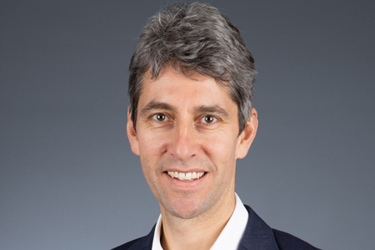
Matthieu de Kalbermatten, CEO of CellProthera.
What lessons has all his international experience added up to for biotechs?
- Build an internal quality (cGMP) organization; become the master of the processes you create for your therapy before moving to external help, then
- Select your CDMO carefully; if you are a cell (or gene) therapy developer, subcontract only as necessary while continuing to develop and optimize the process in your own labs until Phase 3 trials are upon you.
This has worked wonders for CellProthera, as we learned in the first part of our conversation with De Kalbermatten. Here we will dig into that second bullet point:
Selecting (finally) that CDMO to bring you the distance.
And The Winner Is …
CellProthera is a regenerative cell-therapy developer specializing in ischemic diseases. Its Phase 3 trial is for ProtheraCytes, an autologous expanded CD34+ stem cell-based therapy aimed at improving “heart failure event-free survival following a severe heart attack.”
In preparation for that upcoming trial, CellProthera has engaged CELLforCURE by SEQENS for scale up and manufacturing.
How did they select their CDMO for this late-stage outsourcing conversion from in-house development?
“CELLforCURE has produced marketed product, which is important when you choose your CDMO in Phase III,” De Kalbermatten says, “but be certain your selection process is competitive, price-sensitive, and strategic.”
CellProthera discussed the program with half a dozen CDMO in Europe (and some in the U.S.), comparing offers and various attributes. “It's not that there were many negatives among them, but there were experience, equipment, and some huge price variances.”
Even with selecting a partner, De Kalbermatten says, “our operational model remains clear. CELLforCURE by SEQENS will not develop much for us. We did a thorough tech transfer to ensure they’re highly qualified for product manufacturing. Development stays with CellProthera. Manufacturing execution scales with the partner.”
The history of CellForCure played a key role. The CDMO, in De Kalbermatten’s words, “had been completely revamped.”
CellForCure is a former Novartis site. That Big Pharma had invested millions of dollars in new equipment to produce their groundbreaking cell therapy, Kymriah (tisagenlecleucel). Novartis had outfitted this particular facility thinking it needed a full site revamping with more capacity.
The facility fell into the hands of CellForCure, and a key factor in the CellProthera selection process was the use of that same equipment Novartis used to produce commercial product.
“They're fully organized as a commercial organization, because this CAR-T from Novartis was on the market. They produced at scale, important when selecting your CDMO in Phase 3,” says De Kalbermatten.
“When you review the infrastructure and how it is organized, you understand if a CDMO knows what they're talking about, for us if they know the idiosyncrasies of cell therapy for commercial.”
The Late-Stage CDMO Contract
I ask De Kalbermatten what kind of contract you have to enter in order to gain the confidence that the CDMO is committed to work with you over the years of commercial life.
“Obviously,” he replies, “any sponsor should look hard to ensure the CDMO itself can survive.” In that regard, however, what has not been reassuring to CDMO survival has been the CGT market itself.
Today we remain in what many consider a capacity glut, with dedicated CDMOs shutting down, and others shuttering their CGT operations.
On the other side of that, says De Kalbermatten, “because CDMO are not easily filling their capacity, there is much more favorable room for negotiation.” Having said that, though, he adds such negotiations are always some function of the size, number, and frequency of batches you plan on producing.
Zooming out further, De Kalbermatten says more broadly of the CDMO market:
“Ideally – I’m this saying all the time – I wish CDMOs could better consider the position of biotechs with new science and technologies. CDMOs could be more price forgiving during our development phases against, for example, a share of future royalties or some other accommodations.”
De Kalbermatten, in other words, is (another professional) hoping our industry can develop a risk-share formula.
“Considering the difficulty raising funding, and the cost of pivotal phase trials, it would help us create more therapies if we could have upfront flexibility, and then share the pie once we are commercial.
“These days, I think CDMOs should be a little bit more open to this.”
My retort – which I’m saying all the time – is this has never been an ideal business model for CDMOs.
Consider how many more CDMOs – or the CGT operations of bigger players – would have closed this last year had these models actually been implemented widely.
De Kalbermatten says he understands, but stands his ground.
“If CDMOs wanted to fill their capacity, they should have been looking at some innovative approaches."
Of course this doesn't necessarily apply to his current situation, having purposely waited to outsource to a CDMO until Phase 3.
But even within this late-stage initiation, De Kalbermatten says, “We are trying to move in a direction of some form of joint collaborations, some feelings of joint effort.”
In essence (or perhaps just in my mind), De Kalbermatten is offering more risk sharing as risk mitigation for a CDMO's overall survival through the ups and downs of customer markets.
Maybe more collaboration is what is needed to reinvigorate the CGT outsourcing ecosystem. One point I believe is safe to rely on is that whether readers are involved in this branch of our biopharma industry or not, we are all rooting for more cell and gene therapy successes, and strong CDMOs.
In the meantime, CellProthera has its strategy to go strong into Phase 3 with a new partner. It just might be the strategy for others throughout the innovation industry as well.
------------
Part 1 with Matthieu de Kalbermatten, CEO, CellProthera.